

Harbour Navigator: Decarbonisation progress – more than hot air?
- New Zealand’s emissions have not been falling despite the rising number of climate commitments, but there have been some encouraging examples of action from large emitters in the market.
- Fletcher Building has developed the country’s lowest carbon cement through substituting coal in the production process with alternative fuels, such as used tyres and construction waste.
- Contact Energy is investing significantly in new renewable energy generation whilst also transitioning away from its fossil fuel generation in an orderly manner.
- Fonterra is progressing towards exiting coal use through conversions of its boilers to biomass fuel sources, aided by government funding. The company is also investigating solutions for reducing methane emissions.
Fletcher Building
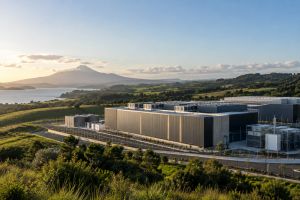
Although the company operates in a high-emitting industry (building materials), it has made an ambitious commitment to achieve a science-based emissions reduction target that has been backed up by tangible action thus far. One of the key initiatives the company has implemented is an innovative solution in the cement manufacturing process. Fletcher Building undertook a project to reduce the carbon involved in cement production by using alternative fuels such as used tyres and construction waste. This means that less coal is used to produce the cement with the added benefit of diverting waste from landfill, helping the transition to a circular economy. This project has been successfully implemented at Golden Bay Cement in Portland, Whangarei, where the company now substitutes half of its coal with alternative fuels and has diverted over 80,000 tonnes of waste from landfill². This has put the company in a good position to meet its science-based target with a 12% total emissions reduction already observed relative to its base year (2018). It also means the end-product of this process, a cement labelled ‘EcoSure’ has lower embodied carbon compared to other alternatives in the market, which helps the company’s customers improve the sustainability of their projects.
Contact Energy
Click the button below to subscribe and will have free unlimited access for a limited time to full article and all other articles on the site.
You will also be able to comment on articles on Good Returns.