


Risk Parity – Models and Myths
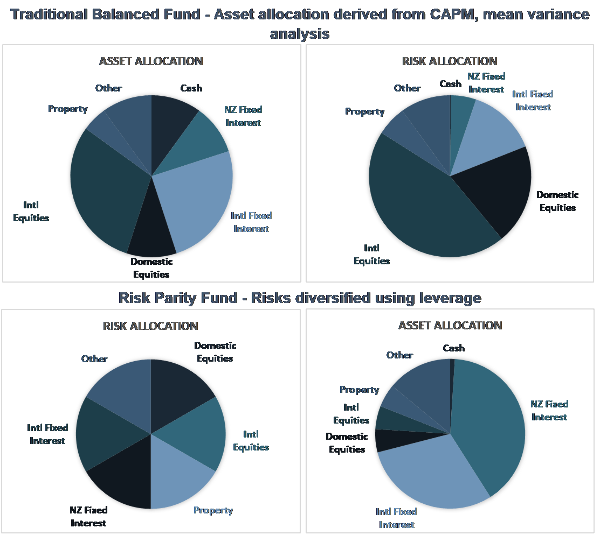
Risk parity strategies are an alternative to the traditional balanced portfolio. The strategy came into being in the 1990s but drew increased attention after the 2007-2009 global financial crisis refocused investor attention on risks in the share market, and on hedge fund strategies to minimize those risks.
In a traditional balanced strategy you increase your expected return by increasing your exposure to growth assets, predominantly equities. As a result, the higher your expected return, the higher your exposure to equity risk. The goal of risk parity is to build a diversified portfolio where each group of assets contributes an equal amount of risk so that the return is not primarily determined by equities.
The allocations are based on research on how each asset performs and relates to the other groups over time. To increase your expected portfolio return you leverage up the least volatile investments, such as bonds.
Click the button below to subscribe and will have free unlimited access for a limited time to full article and all other articles on the site.
You will also be able to comment on articles on Good Returns.