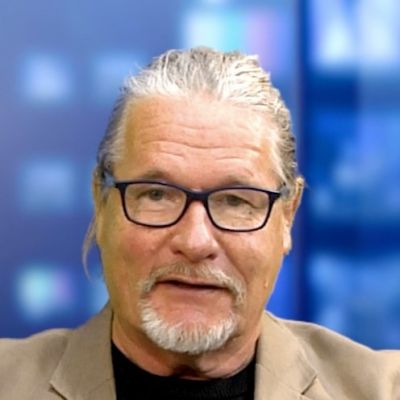



[GRTV] Victoria Harris gives Elevation Fund a makeover
GRTV: Welcome to Good Returns TV. I'm Philip Macalister. Something special today: all the way from London, I have Victoria Harris. Victoria is the co-founder of The Curve, but is also known to quite a few advisers here through roles at Milford, Devon and Pie Funds. Welcome, Victoria.
Victoria: Thank you. Thanks for having me.
GRTV: Can you give me a little rundown on The Curve and what you do? You're also in the news recently because you bought Elevation Capital.
Victoria: The Curve is essentially a media company and financial education platform. We've got a podcast, online courses, and we hold events and talks. We do a lot of talks in corporates, upskilling staff. We started about five years ago as a podcast. That blew up, and all the other products came from there. About three years ago we moved the business to the UK and have grown it there. I really wanted to change the narrative when it came to women growing their wealth. In the three funds management companies I worked for, I was always the first female or the only female. There was a lack of women in the industry, and at the same time my friends were coming to me asking about investing. They didn't have a familiar face to go to for advice on where to start their investing journey or what to invest in. That's why we started The Curve as an education company. Now it has morphed into a sister company called The Curve Investments, which gives our community a way to actually invest. We were educating women, but for the 'doing' part they were being sent elsewhere and getting confused all over again, having to choose a fund or trading platform. We thought: why don't we do the whole journey?
GRTV: So basically, today you're launching your own fund. I'm not sure you expected to be launching a fund when you set up your podcast.
Victoria: No, not at all. The Curve Fund, yes.
GRTV: The Curve Fund is specifically designed for women investors, and you've got some core fundamentals behind the investments you make. Can you tell me about those?
Victoria: Anyone is welcome to invest — the more the merrier. But throughout my career I found there was a lack of funds that spoke to a female audience, and also to a younger audience. A lot of funds management and investment companies have been around for a very long time and have well-established brands. We wanted to create something new and interesting in the market that primarily spoke to a female audience. Historically, many products naturally spoke to men because men had been the breadwinners and investors for much longer. That was why we started The Curve, but anyone can invest. The fund will invest in female-led businesses, founder-led businesses and future-focused businesses. We call it our FFF.
GRTV: What do you put under future-focused?
Victoria: We want to invest in growth businesses that we think will be bigger and better in the future. Theme-wise, that can include AI, healthcare, sustainability and companies that have a positive impact on the planet. It's pretty broad.
GRTV: When I was reading about what you're doing, I thought it's almost like an SRI or responsible investing fund, but the lens is both goodness and women.
Victoria: It's not a sustainability fund or SRI fund as such, but at The Curve we've always educated people about what we like to see in investments: a strong balance sheet, operating in a structural growth industry, being founder-led, or having a CEO with a lot of skin in the game. Those are things I look for as a portfolio manager. We've educated our Curve audience about that for a long time, and this fund is a natural extension. I would have loved to have had a fund that only invests in female-led businesses, but unfortunately there aren't enough public companies led by women. So we introduced the founder-led and future-focused angles as well. Those companies will still have to meet the investment criteria we've talked about at The Curve for so long.
GRTV: How are women investors different to men?
Victoria: Where do I start? Firstly, we take a bit longer to get across the line on an investment. I think men can be a bit more gung-ho — they'll do it and hope it works out. They're more frequent traders, and I saw that in the teams I used to work for. I was the one who didn't trade as much as the men. There's nothing wrong with that; they were great portfolio managers and got great returns. But women do tend to take a bit longer to make a decision. At The Curve we've tried to build trust and nurture that female audience ahead of time, so we're hoping it will be a much easier investment decision for them to invest in the fund.
GRTV: And then they're probably more likely to stay longer.
Victoria: Yes, that's what we're hoping. We always hope customers stick around. This is a generalisation — I'm not saying every woman and every man is like this, and we try not to make it too gendered. It's an inclusive product for everyone. But women also tend to be a bit more conscious about future generations. That's part of the future-focused bucket: investing in companies that will have a positive impact on the future. Women can have a bit more of a philanthropic lens, or like to invest in companies with more social awareness. They are often making decisions not only for themselves but for their families as well.
GRTV: It's often been said that women are more risk-averse investors. Is that true or false?
Victoria: I like to call them risk-aware. I don't like 'risk-averse' because it makes us sound like we don't take risks at all. I think we do when we have enough knowledge to make the decision. We like to have a bit more information, which could put us in the risk-averse category, but I think it's more about being risk-aware. We like to have more education and knowledge, and because women have been left behind for so long, there's a lot of catch-up we're trying to do.
GRTV: Putting your portfolio manager's hat on, does that change the type of risk you take within your portfolio, or would it be the same as a traditional equities portfolio?
Victoria: I don't think it does. We're in a world now where there are a lot more incredible companies that women might want to invest in than there were 10 or 20 years ago. You mentioned SRI and ESG and all the other acronyms, but there are a lot more companies now that are aware of their impact on the world and society. So I think there are a lot more options for me as a portfolio manager than there probably were 10 years ago.
GRTV: Through your podcast, what's the most common investment question a woman would ask you?
Victoria: One of the most common themes we see is: 'I don't have enough money to invest.' I think that's partly a function of society saying to women, 'Save your money. Don't spend it on that,' whereas men are often told, 'Invest your money. Invest in this business. Here's how to be an entrepreneur.' That starts from a very young age. The idea that 'I don't have enough money' is definitely a big one. The fund has a very low minimum of $500, one of the lowest in the industry. That was a function of listening to our audience and saying: you actually don't need that much money to start investing. There's still a mentality of, 'When I get rich, I'll invest.' But investing is how you get rich; it's not what you do when you're rich. Women also haven't earned as much as men over the years, and that's played into the psyche as well. Then there are thoughts like, 'I've missed the boat', 'I'm too old', or 'It's too overwhelming and confusing.' We've tried to lean on being transparent and accessible, including having direct access to me if people need it. Building trust is really key, particularly when it comes to money.
GRTV: Recently you bought Elevation Capital. What changes are you making to that fund?
Victoria: We bought Elevation Funds Management, the manager, and the fund was the Elevation Global Shares Fund. We rebranded Elevation Funds Management as The Curve Investments, and the fund became The Curve Fund. Through that acquisition process we've made a number of changes to the fund, including the lower minimum and the fees.
GRTV: And I guess you have to change the portfolio as well?
Victoria: Yes. We're in a transition and changing that. It's a big job, but it's exciting. We want to get the fund to where we want it, and it's pretty much there. To be honest, the strategy is pretty similar — global equities to global equities — but we wanted a preference for female-led and founder-led companies.
GRTV: I'm sure you'll get a lot of support for it. It sounds exciting. Well done, and thank you for coming in. It's great to have you on here.
Victoria: Thank you. Thanks for having me.
This transcript has been edited for clarity and brevity.

![[GRTV] New Retirement Commissioner David Boyle outlines his goals](https://goodreturns.co.nz/images/default.jpg)
![[GRTV] Victoria Harris gives Elevation Fund a makeover](https://goodreturns.publit.io/file/c_fill,w_300,h_200/6aeb98f8-4d97-47f7-807f-67bc8fef007e.jpg)
![[GRTV] Increasing access to advice](https://goodreturns.publit.io/file/c_fill,w_300,h_200/58e5d120-b56f-45e8-b62e-695890f7ea50.jpg)