





Angus Dale-Jones: Level 5 is minimum standard for advisers
GRTV: Welcome to Good Returns TV. I'm Philip Macalister. Joining me in the studio today, after nine years in his role as the chairman of the Code Committee, is Angus Dale-Jones. Welcome, Angus. So nine years in charge of the Code Committee. That's a long time.
Angus Dale-Jones: Nine years goes very quickly.
GRTV: And tell me, just to start off with, can you explain to me what the Code Committee's about and what it does?
Angus Dale-Jones: At the centre of the advice regime, just like the previous regime under the old Financial Advisers Act, is this code, and the idea is to provide flexibility, so that through consultative processes, we can develop some flesh around the bones of the regime. So that's what the code has attempted to do.
GRTV: And because there's been quite a lot of debate around class advice and whether you're trying to create all these different categories or whether there's one sort of big approach to it, what's your view on that one?
Angus Dale-Jones: So that's a challenge for all the jurisdictions we like to compare ourselves to. Do you prescribe in a black letter law way different standards for different types of advice, or do you have overarching principles? Now, if you go too far down the principles route, it can get a bit blurry sometimes as to what you need to accomplish. If you get very black letter law focused saying, "In this situation, you do this, and in the other situation, you do that," you can encourage perverse behavior. You can get people downsizing advice, because they want to skip rules. So I prefer the bigger picture and trying to make sure that they're workable principles.
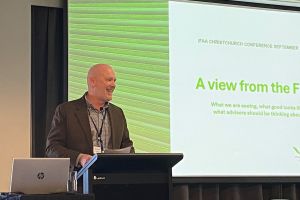
GRTV: So essentially, you were saying to me, or you were saying at the recent FANZ summit, that the code is about promoting professional judgment. Can you explain that?
Angus Dale-Jones: So you can have a set of rules to say, "In this situation, do that," whereas professional judgment is much more balancing the circumstances of the client and the situation that the client finds themselves in. It's just like going to a medical practitioner, and I've often over the last nine years linked giving advice to medicine. When you go to a doctor, you expect the doctor to expand or contract their questions depending on common sense, and that's essentially professional judgment.
GRTV: And so you're saying that an adviser should be treating every client in a different way in terms of understanding what they're doing rather than one prescriptive type of approach to it.
Angus Dale-Jones: Every adviser is unique, and it's the huge advantage that human advisers have over technology. It is being able to ask those probing questions and actually say, "All right, well, and I need to direct my attention in a particular way."
GRTV: And that comes back, and there's this great quote, and it says, "If you deliver advice in the same way to every client, you're never going to get over the hurdle to advice accessibility." So is that the key to it?
Angus Dale-Jones: Absolutely. And advice is a journey, so a person isn't going to just get one set of advice for their whole lifetime. Different stages in their life, they have different advice needs. And at some points in that journey, you really need that human judgment about, "Okay, where do I need to push? Where do I need to pull back?"
GRTV: But that's essentially one of the conflict points at the moment, and we've seen it from research out of the FMA, as they're calling for innovation and calling for people to be flexible in their approach, but advisers seem to be quite reluctant to do that. Why do you think that is?
Angus Dale-Jones: So I think some advisers are actually quite good at experimenting with different pathways, but I think it's giving people the confidence that technology is your friend. That there are things that you can do with technology that actually take a burden away on some things where technology can help you gather information and perhaps make some simple decisions. But that judgment of the human adviser to bounce things off the client, to have a conversation with the client, to actually help the client go into spaces that the client might not have gone into without a little bit of nudging.
GRTV: So the professional judgment thing and using your acumen is quite interesting. For someone who's been in the game for 10, 20 years, they can probably do that quite well. But for a new adviser, new to industry, one or two years, that must be quite difficult. How do you think they deal with that?
Angus Dale-Jones: I think some of the new advisers are best suited to understanding how technology can help. So it's not just about being in the game a long time. At the end of the day, to me, it's about flexibility. It's about being open to how things change. And last year when we changed that CPD standard, when we moved away from the word of maintaining a CPD to continually developing it, it was that.
GRTV: It's sort of keeping up with circumstances. Well, that was quite controversial, because it was shifting from maintaining competence, knowledge, and skills to continually stretching people. Yeah. Why do you think that was controversial?
Angus Dale-Jones: I think there were some people who thought we were saying that they kept on having to stretch themselves by getting more and more education. And to a point, we were saying that, but only insofar as the advice they are giving needs it. So it's about recognizing that the world we live in changes. It's always changed.
GRTV: So it's not like they get to a certain level, they put a certificate on the wall and say, "We're here now." Yes. They actually have to keep evolving it. So another thing that I said at that Financial Advice New Zealand Summit the other day was professional judgment isn't an accomplishment. It's not just something that you put a certificate on the wall. It's an ongoing attitude. It's how you think about how you give advice. Yeah. So that was quite good. You had this great quote that, "We want to treat professionalism as an attitude." Yes. So can you expand on that one?
Angus Dale-Jones: to me, the center of professionalism is your client, the consumer. It's understanding the world from their perspective, understanding what they say they need, but also understanding or maybe they don't know. And you could help them along that journey. I've had that experience in particular with life insurance. Mm-hmm. It's very seldom a person outside the life insurance industry who actually understands what life insurance can do for them. You need that conversation. Mm. And that to me is professionalism. It's not just selling a product.
GRTV: And so coming back to the summit, you asked for three things about the future, and so one of them was, and you've touched on it already, is technology being your friend. How important is that?
Angus Dale-Jones: So technology is sort of at the end of my list, because I think technology is serving some of the higher order things. But technology changes the way the world operates, and of course, I'm referring to artificial intelligence. Even the best imaginations can't really grasp what AI is going to do to our workplaces and the way we live. But we know it's going to change. And to me, and the message I tried to give at the summit was to treat technology as your friend.
GRTV: If you think technology is not going to change the way you give advice-
Angus Dale-Jones: .. you're kidding yourself. But will technology, will AI take over advice? Well, certain types of advice quite possibly will rely much more on technology, but there are other types of advice that perhaps advisers haven't been able to give so much of previously because they've been focused at the detailed level. Mm. That conversation, the developing a client's understanding of their financial position and building up to retirement, which is another one of the points that we can come to. Yeah. Next time. That is something where technology really enables advisers to do really valuable work.
GRTV: So what is New Zealand's secret sauce?
Angus Dale-Jones: I did say we had the sort of secret sauce or secret superpower, and that's
GRTV: KiwiSaver. And maybe I should preface that with saying it has the potential to become a superpower. If you look at financial services generally,
Angus Dale-Jones: yes, advice is really, really important. But the big thing that's sitting there not properly working or not working ideally is retirement. Mm-hmm. And the stat that horrifies me, in fact, is that one sixth of our tax dollars goes to NZ Super, and if we leave that for a generation, it's going to almost double. Now, advice is part of the journey. Mm. In finding a solution there. And KiwiSaver is where that advice needs to focus. It's not so much about saying which KiwiSaver product to go into, but it's understanding how KiwiSaver becomes part of a person's life journey in financial services.
GRTV: Yeah, look, I get the impression now that the dialogue around KiwiSaver needs to change from what fund you're in to another level, and it's about the outcomes and what people want is, and I'm not quite sure we're there with that yet. So I'm actually less worried about the KiwiSaver product and which fund you're in
Angus Dale-Jones: and all of that. I'll leave that to the technical people to deal with. I'm much more interested in that conversation with the client about that journey over decades to retirement and what they want from that. And once you start to think about KiwiSaver like that, as a key pillar in a lifelong journey, then it becomes a much more interesting conversation. That's much more about how big an issue does it become in your financial plan? How much emphasis do you give it rather than are you with the right provider or in the right fund?
GRTV: Yeah, definitely. And just changing topic a little bit, one of the big talking points in the media at the moment is around conflicts of interest. Yes. Obviously, that's been come up with the FMA recently. Yeah. People sometimes look at the makeup of the Code Committee and say, "Are some of these members conflicted?" What is your answer to that?
Angus Dale-Jones: I think if not all, definitely many of the members of the Code Committee have some sort of connection with financial services. So the Code Committee has for years now had a conflicts register. The committee has a conflicts register. But more than that, before every meeting, the Code Committee has this habit of talking about conflicts. So at that level, conflicts are well addressed. But you need to think of this in the context of what the Code Committee does. The Code Committee is a standard setter. It makes a recommendation to the minister, and the minister has the final say on what goes into the code. That's very different from a big agency, particularly a regulatory or an enforcement agency where there are much more serious consequences if there is a conflict.
GRTV: Okay, couple last questions. Level five, is that a high enough standard for financial advisers?
Angus Dale-Jones: We have
GRTV: Yes or no?
Angus Dale-Jones: It depends. What we've done with the code now is link it to suitability to say, in determining what you need to do in a particular advice situation, one of the things you need to think about is do you have the right qualifications? And it's not just have you got a university degree? It's do you understand the cultural situation of this client? Do you understand the technical complications of the particular product and so on. So level five as a minimum standard, which is what the code is required to set, absolutely that's good. But as the ultimate standard, the best practice standard, no, and that is why professional associations have such an important role.
GRTV: Hmm. Yes, you're very clear on that one. And just finally, nine years at the Code Committee, you've got a recently new code. How would you rate it out of 10? Is there anything you'd change?
Angus Dale-Jones: There are always things that you want to change, and I think that's the nature of the beast. You can never reach... I don't think there's such a thing as perfection. I think getting more consumers to understand how advice could help them is really important. That's a challenge for the regime as a whole, and anything that the code could do to help on that pathway would be great.
GRTV: No. Excellent. Thank you, Angus. And nine years, that's a very good inning.
Angus Dale-Jones: And thank you for all the support that Good Returns has given to the committee. Much appreciate.
GRTV: Pleasure. We will continue to do that. Yeah. Great. Even though you're not there. Thank you. Yeah. Thanks, Angus. All the best. Cheers.
This transcript has been edited for clarity.


![[Weekly Wrap] KiwiSaver in play; but outcome unclear](https://goodreturns.publit.io/file/c_fill,w_300,h_200/0ad582e4-c9a3-4692-bbe2-62d928f77fd2.jpg)
![[GRTV] Lifting the hood on KiwiSaver promises this election](https://goodreturns.publit.io/file/c_fill,w_300,h_200/cefb2467-4408-4a1d-bc61-baf9e1713abf.jpg)

![[GRTV] New Retirement Commissioner David Boyle outlines his goals](https://goodreturns.co.nz/images/default.jpg)